
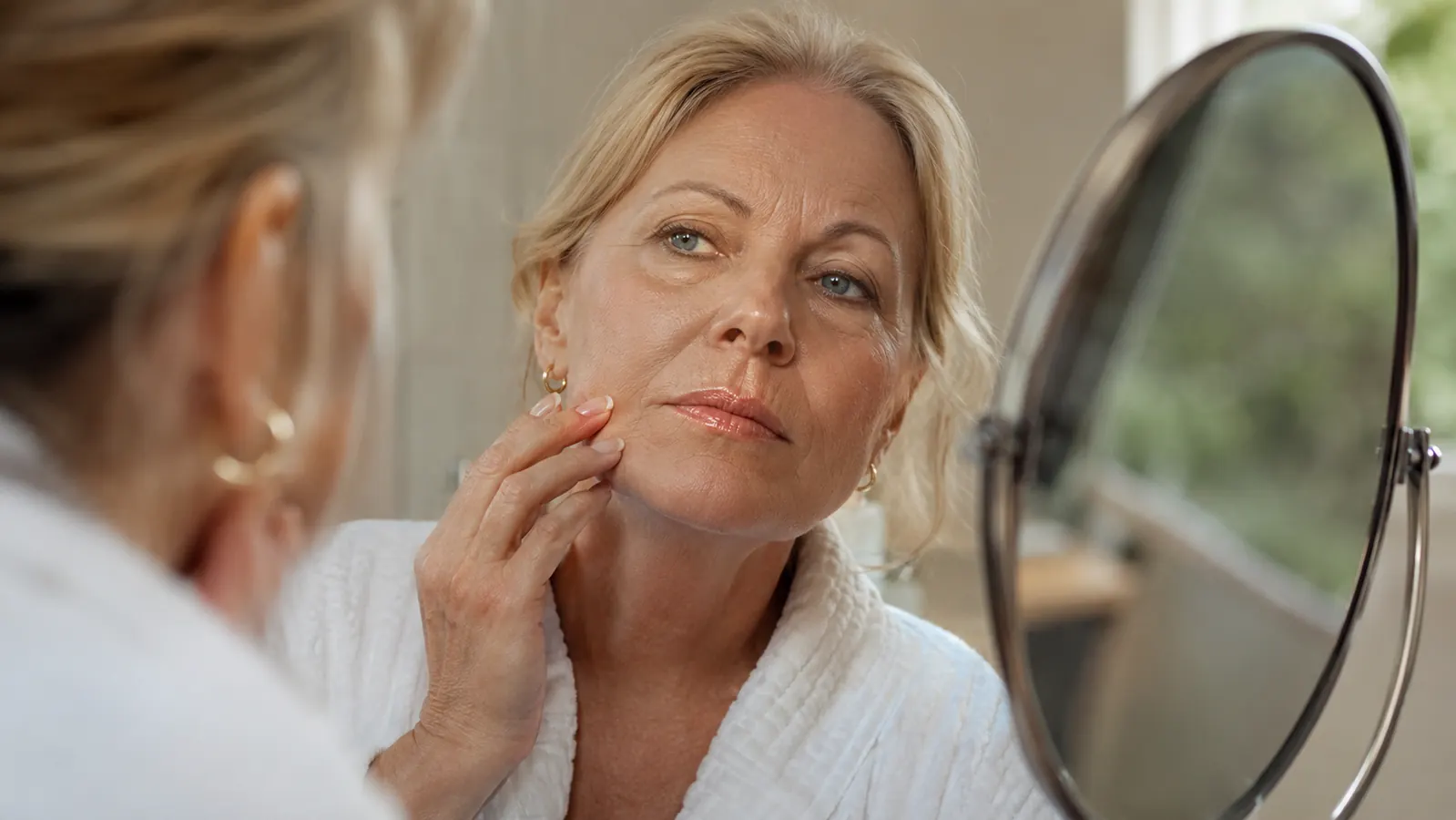
I need to tell you something before you read one more word of this review: I did not want to like this serum. My dermatologist has had me on prescription tretinoin off and on for twelve years, and every time a bottle claims it can do what retinol does without what retinol does to your face, I roll my eyes so hard I nearly strain something. So when my sister-in-law Carol, who is 58 and has rosacea-prone skin that flares if you so much as look at it wrong, showed up at my kitchen table raving about a CELDYQUE bakuchiol serum she'd been mixing into her moisturizer for a month, I figured I'd try it myself just to prove her wrong.
I did not prove her wrong. I did not fully prove her right either. That's the honest version, and it's the one nobody selling you a bottle wants to give you.
The Quick Verdict
A genuinely effective retinol alternative for sensitive, mature skin, but it is not a one-to-one replacement and the concentrate format takes getting used to.
Amazon Check Today's Price →Before You Read Another Retinol Horror Story, See What Actually Worked
If flaking, redness, and "purging" have kept you off retinoids for years, this is the concentrate serum that finally let me use an active every night without dreading my own mirror.
Amazon Check Today's Price on Amazon →How I've Used It
I bought the CELDYQUE Korean Bakuchiol Concentrate, the DIY mix-in serum at 30,000 ppm, in early May, mostly out of curiosity and partly because Carol wouldn't stop texting me photos of her cheeks. The bottle is small and the instructions are blunt: it's a concentrate, meant to be mixed a few drops at a time into your regular moisturizer or serum rather than applied straight to bare skin. That surprised me at first. I'm used to products that want you to pat them on solo and let them soak in like they're the main event.
I used it five nights a week for eight weeks, mixed into a plain, fragrance-free moisturizer I already had on hand. I skipped the two nights I use my tretinoin, because layering two active ingredients that both claim to do the same job seemed like asking for trouble, and honestly, I wanted to see what the bakuchiol could do on its own merit, not propped up by a prescription retinoid doing the heavy lifting.
I did not use a separate control side of my face, which I know some reviewers do, because at 63 I don't have the patience to look lopsided in Zoom calls with my grandkids for two months. What I did instead was take a photo every Sunday morning in the same bathroom light and keep a one-line note in my phone about how my skin felt that week. Boring, low-tech, and I think more honest than most of what you'll read.
I'll admit the mixing ritual felt fussy for the first week or two. I kept forgetting whether I'd already added drops to that night's moisturizer, so I started keeping the concentrate bottle sitting on top of my moisturizer jar as a visual reminder, a small trick that sounds silly but actually worked. By week three it was as automatic as brushing my teeth, which tells you something about how quickly a new habit sets in once you stop overthinking it.
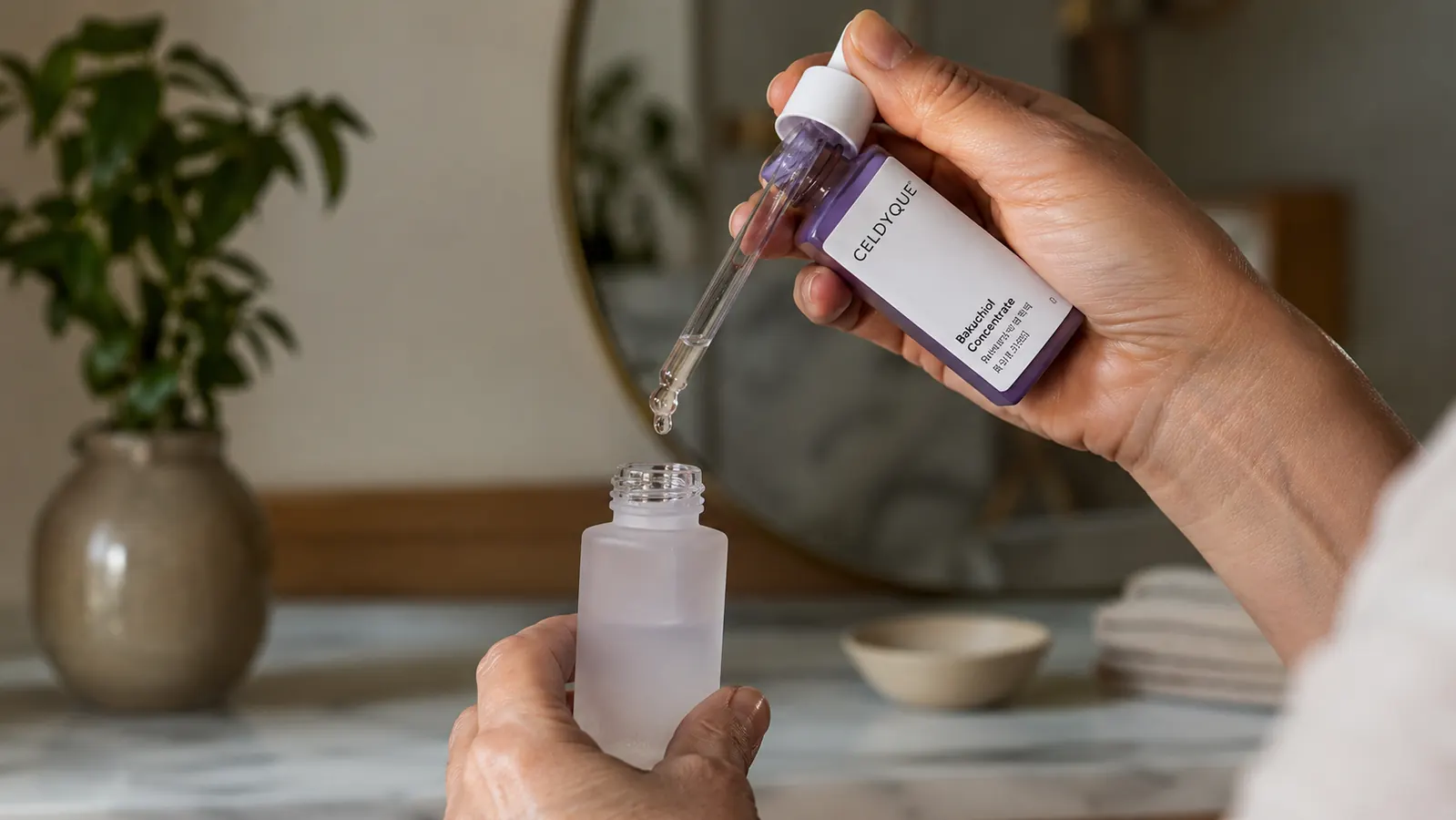
What's Actually in That Amber Bottle
Bakuchiol comes from the seeds of the babchi plant, and it's been used in Ayurvedic medicine for a long time before skincare marketers got hold of it. The reason it gets compared to retinol isn't hype for hype's sake, there is real research, most notably a 2019 study in the British Journal of Dermatology, showing bakuchiol can produce comparable improvements in fine lines and pigmentation to retinol, with meaningfully less irritation. That study gets quoted on nearly every bakuchiol product page on the internet, and for once, it's actually being represented fairly.
What that study didn't test, and what nobody selling you a bottle will volunteer, is a concentrate at 30,000 ppm meant to be self-diluted. Most bakuchiol serums come pre-mixed at a fixed, tested percentage. CELDYQUE hands you the concentrate and trusts you to figure out your own ratio. That's a real difference. It gives you flexibility, sure, you can go stronger as your skin adjusts, but it also means the effective strength you're actually applying depends entirely on how many drops you use and how much moisturizer you mix it into. I started at two drops per pump of moisturizer and worked up to four by week five.
The rest of the ingredient list is short, which I appreciated. No fragrance, no dye, nothing that reads like a chemistry final exam. For someone like Carol, whose rosacea gets set off by fragrance and by a laundry list of "actives" all crammed into one product, a short list is a feature, not a corner cut.
One thing I wish the packaging explained better: how much is actually a fair "drop" ratio for a first-time user. I ended up doing my own research and cross-checking a few dermatology forums before I landed on my two-drop starting point, which is more homework than most people want to do with a new serum. A simple dosing chart printed on the box would have saved me a Saturday afternoon.
The Retinol Question Nobody Answers Honestly
Here's where I'm going to be more direct than most reviews I've read. Bakuchiol is not retinol. It works through a different, less understood mechanism, and while the research is encouraging, it is nowhere near as extensively studied as retinoids, which have decades of dermatological data behind them. If you have deep static wrinkles, significant sun damage, or a dermatologist actively treating something, bakuchiol is a gentle addition to your routine, not a replacement for medical-grade treatment. I want to say that plainly because I've read at least a dozen product pages that dance right up to the line of implying otherwise.
What it is genuinely good at, in my own two months of use, is the kind of maintenance glow work that doesn't need a prescription. My skin looked more even. The fine crepey texture on my cheeks that shows up in bad bathroom lighting softened. My under-eye area, which is the part of my face that shows my age the fastest, looked less crepey by week six. None of that is a wrinkle disappearing. All of that is real, and all of that is the kind of change a friend would actually notice before a dermatologist would.
Carol, who cannot tolerate retinol at all, three separate dermatologist-prescribed attempts over the years, every one of them ending in weeks of peeling, got results closer to what the research promises. Her skin tone evened out more dramatically than mine did, likely because she had more inflammation and redness to begin with. That's an important, honest point: if retinol has never been an option for you because of sensitivity, bakuchiol has a lot more room to show up as a dramatic before-and-after. If you're already using retinol and tolerating it fine, this is a gentler sidestep, not an upgrade.
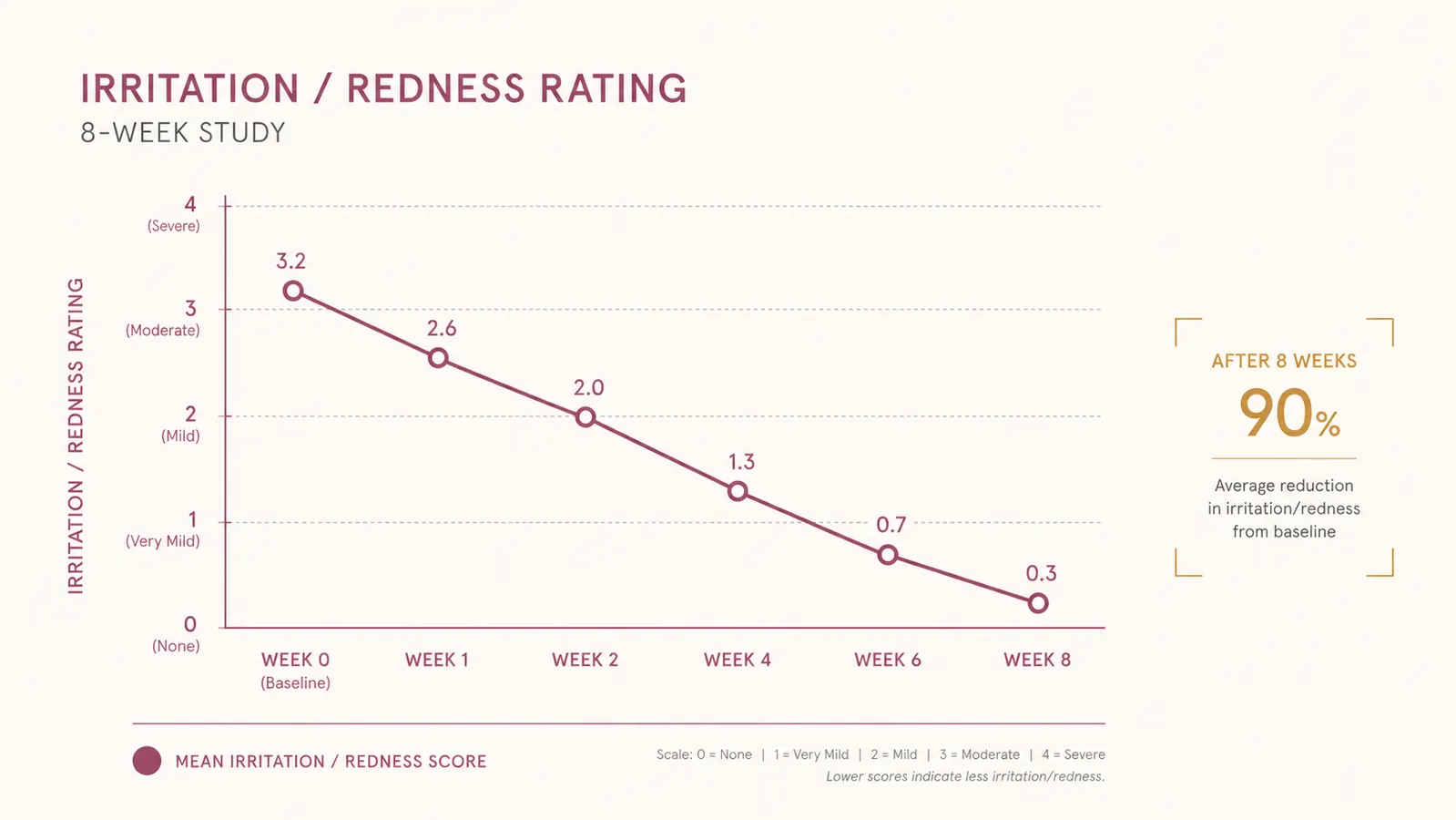
What Changed Over Eight Weeks, and What Didn't
Week one and two, honestly, not much. A little bit of a warm, tingly feeling for the first ten minutes after applying, which faded fast and never turned into actual redness for me. By week three my skin felt noticeably softer to the touch, the kind of thing my husband commented on before I said anything to him, which is the best kind of proof there is.
Weeks four through six were where I saw the most visible change in my Sunday photos: brighter overall tone, less dullness in the mid-afternoon slump that used to make me reach for extra concealer by 3pm. Weeks seven and eight, the improvement plateaued. That's normal and worth knowing going in, this isn't a product that keeps delivering dramatic new results forever. It gets you to a better baseline and holds you there with continued use.
What didn't change: my nasolabial folds, the two lines that run from my nose to the corners of my mouth. Those are deep enough at this point that I don't think any topical, retinol or otherwise, is touching them without help from a dermatologist. I mention this because a review that claims a serum erased deep-set wrinkles is a review you should not trust.
How It Stacks Up Against Other Bakuchiol Serums I've Tried
This isn't my first bakuchiol rodeo. Two years ago I tried a pre-mixed bakuchiol serum from a drugstore brand, applied straight from the pump with no dilution required, and I liked the simplicity but felt like I couldn't tell if it was doing anything. There was no way to adjust the strength, no way to build up gradually, and after three months I quietly moved on without much to show for it. Carol tried a different pre-mixed version around the same time with a similar shrug of a result.
The CELDYQUE concentrate is the opposite experience in almost every way. It's more work, but it also feels like it's actually doing something, in part because you can feel yourself adjusting the dose as your skin tells you what it wants. That's a real advantage for someone who has been burned by both overly harsh actives and underwhelming gentle ones. The tradeoff is that you're doing a small amount of the formulation work yourself instead of trusting a lab to have already dialed it in for you.
I also compared notes with a friend from my book club, Diane, 67, who has used a well-known pre-diluted bakuchiol serum from a bigger skincare brand for over a year. She likes hers, but pays noticeably more per ounce of usable product than I do once I account for how far the concentrate stretches when mixed properly. That's not a scientific comparison, just three women over 60 comparing notes over coffee, but it matched what I expected once I actually sat down and did the math on cost per application.

The Downsides Nobody Mentions in the Reviews
Now for the part most five-star reviews skip entirely. The concentrate format is genuinely inconvenient if you're not someone who likes fussing with your routine. Mixing drops into moisturizer every single night is one more small task, and on the nights I was tired or traveling, I skipped it more often than I skipped my regular products, simply because it required an extra step my hands weren't used to.
Second, because you're self-dosing, results are genuinely inconsistent night to night unless you're disciplined about your ratio. I found myself eyeballing drops more casually by week six than I did in week one, and I do wonder if my plateau was partly a dosing plateau rather than a product ceiling.
Third, and I want to be fair here, a small bottle does not last as long as you'd hope when you're mixing it fresh nightly rather than applying a pre-diluted serum straight from the pump. If you're the type who wants a grab-and-go product with zero thinking involved, this will frustrate you more than it delights you.
Fourth, and this one is more of a nitpick than a real complaint, the concentrate has a faint earthy smell that isn't unpleasant but isn't neutral either. It's not fragranced on purpose, it's just what an unfragranced plant-derived active smells like, but if you're expecting the clean, scentless feel of a lot of modern serums, it's worth knowing ahead of time so it doesn't catch you off guard the first night.
What I Liked
- Genuinely gentle, real results even on rosacea-prone skin that rejects retinol
- Short, simple ingredient list with no fragrance or dye
- Visible improvement in tone and mild crepey texture within 3-6 weeks
- Flexible concentrate lets you adjust strength as your skin adjusts
- No purging, no peeling, no downtime
Where It Falls Short
- Concentrate mixing format is an extra nightly step, not a grab-and-go product
- Results plateau after week six rather than continuing to improve
- Self-dosing means consistency depends on your own discipline
- Not a substitute for prescription treatment on deep, established wrinkles
- Bottle empties faster than expected when mixed fresh nightly
It didn't erase twelve years of sun damage. It just made my skin look like it was having a better week, most weeks, and after a while that adds up to something real.
Who This Is For
This serum makes the most sense for women over 45 whose skin has never tolerated retinol well, whose main complaints are dullness, mild crepiness, and uneven tone rather than deep wrinkles, and who don't mind one extra small step in their nightly routine in exchange for something gentle enough to actually stick with long-term. If you're the person who has three half-used retinol tubes in your bathroom drawer because every single one made you peel, this is worth your attention.
Who Should Skip It
Skip this if you're already using and tolerating a prescription retinoid with good results, since there's little reason to add complexity for a gentler ingredient doing a similar, less potent job. Skip it too if you want a product you can use without thinking, the concentrate format punishes an inconsistent routine, and skip it if your main concern is deep, established wrinkles rather than tone and texture. A serum, any serum, is not a substitute for a conversation with your dermatologist about what your skin actually needs.
If Retinol Has Never Worked for You, This Is the Honest Middle Ground
Not a miracle, not a retinol clone, but the gentlest active I've found that Carol and I both stuck with for two full months without a single flare-up.
Amazon Check Today's Price on Amazon →