

My sister Diana called me on a Tuesday afternoon in a near panic. She had seen a video online claiming that dermaplaning at home would leave women our age with nicked, scarred faces and hair that grows back thicker than before. She knew I had been doing it every week and wanted me to stop immediately. I told her to sit down, because I had answers, not guesses.
This is not a glowing sales pitch. This is the honest safety review I wish someone had handed Diana instead of letting her doomscroll herself into a state. After roughly two months of weekly use with the Schick Hydro Silk Touch-Up Dermaplaning Tool, here is what is actually risky, what is pure myth, and what I would want a friend to know before she ever picks up the blade herself.
The video Diana saw showed a woman with a visibly nicked chin and captions claiming at-home dermaplaning was banned in spas for a reason. None of that held up once I looked closer. Spas do not ban it, they just charge for the version they perform themselves, and the nicked chin in that clip came from a completely different, uncovered straight razor, not a guarded consumer tool like this one. Context matters, and fear spreads faster than context does.
The Quick Verdict
Safer than the scary posts suggest, but not risk-free. Respect the blade, respect your skin, and it behaves. Ignore that and you will learn the hard way, just not the way people online claim.
Amazon Check Today's Price →Worried about trying a razor on your own face? You're not alone, and it's a fair question.
Here is the exact three-pack I've been safety-testing on myself weekly. Check today's price and stock before you decide either way.
Amazon Check Today's Price on Amazon →How I Actually Tested This for Safety
I did not just try the Schick Hydro Silk tool once and call it good. Once a week for eight weeks, I documented what happened to my skin in a little notebook by my sink, mostly for my own peace of mind after Diana's call, but it turned into a real record. I noted redness, irritation, breakouts, and anything that felt even slightly off, along with how long it took to fade if it happened at all.
I also called my dermatologist's office and asked the nurse directly whether at-home dermaplaning was something patients my age should be cautious about. I wanted a professional answer, not a forum opinion, before I kept using this on my own face twice as often as most reviews suggest.
What follows is a mix of my own eight weeks of notes and what her office told me, laid out plainly so you can decide for yourself instead of taking either a glossy ad or a scary video at face value.
I also asked two friends in my book club, both in their fifties and both a little squeamish about the idea, to try it alongside me and report back honestly rather than being polite about it. Neither of them had a bad experience, but comparing three sets of notes instead of just my own gave me more confidence in what I was seeing than a single data point ever could.
Can You Actually Cut Yourself With This?
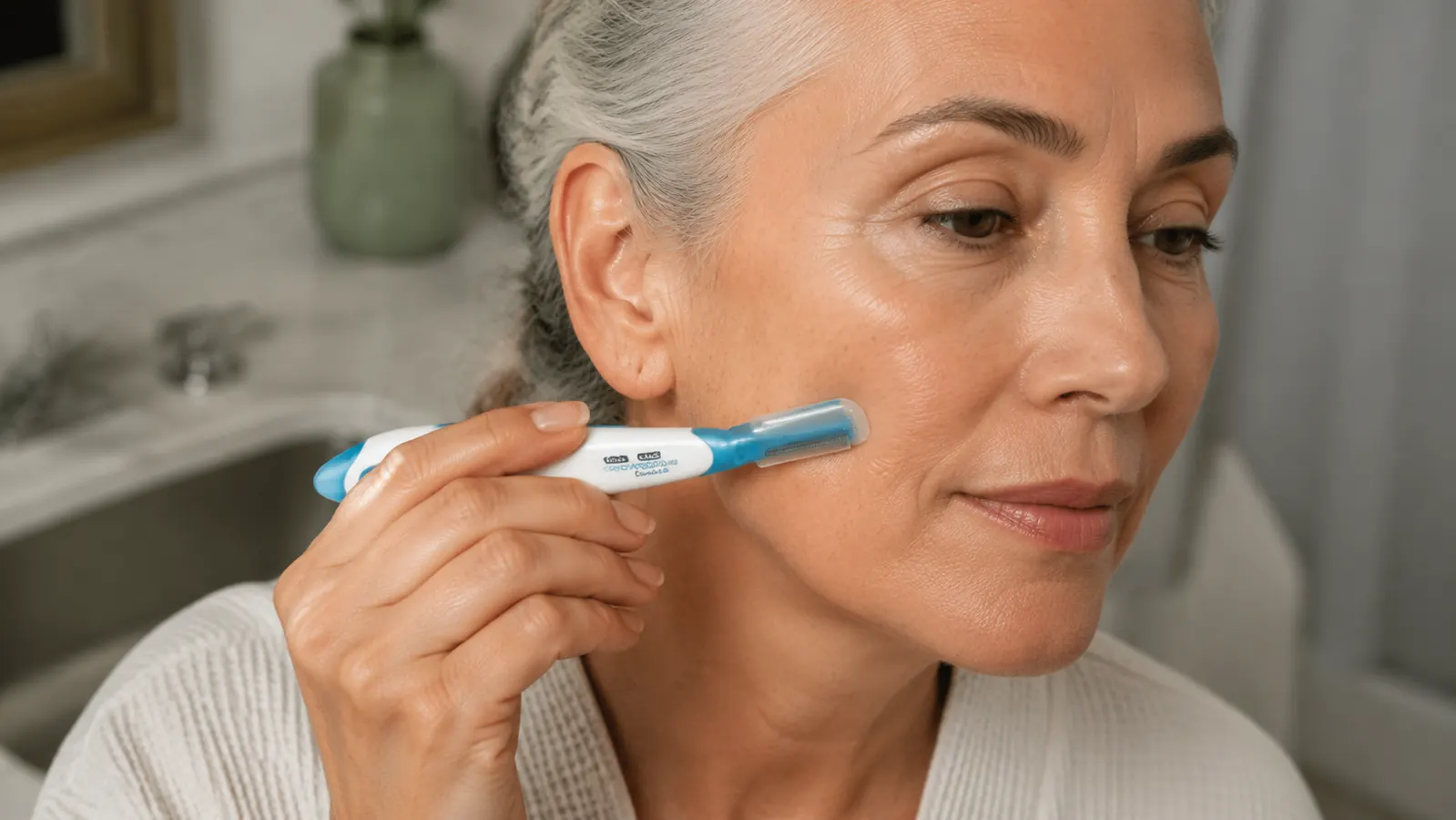
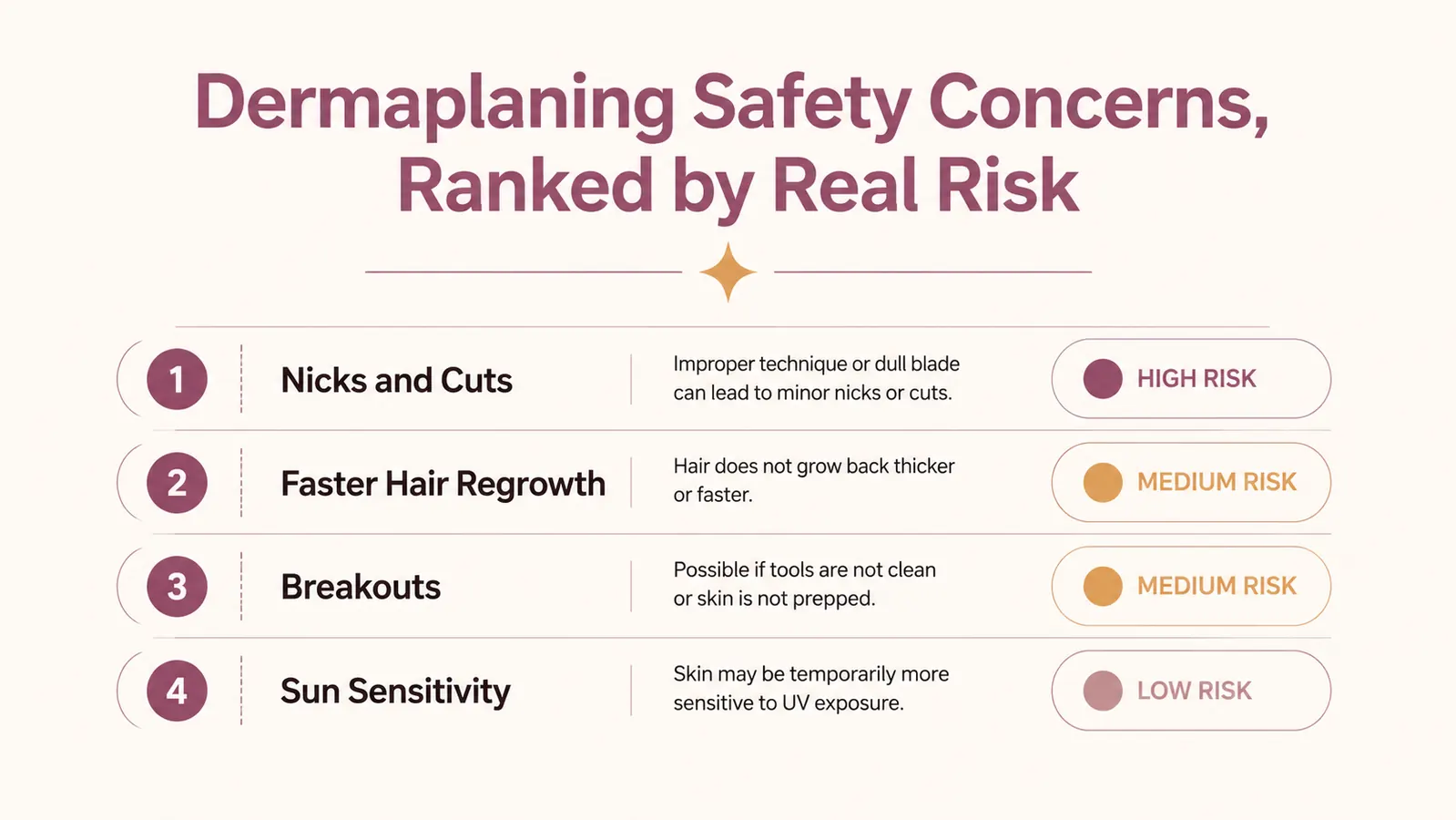
Yes, technically, but it is much harder than the word razor makes it sound. The Schick Hydro Silk tool has a precision cover over the blade edge, a thin protective guard that sits between the sharp part and your skin. It is not a straight razor. I could not get it to nick me even when I pressed harder than the instructions recommend, purely as a test, on the inside of my forearm first.
The real risk is pressing too firmly over bony areas like the jawline or cheekbone, where skin sits thin and close to the surface. That is where the rare small red mark happens, and it is closer to a light razor burn than a cut. It fades within an hour in my experience, not the days-long scarring some posts imply.
The nurse at my dermatologist's office confirmed this matches what she sees in practice too. Actual lacerations from these guarded consumer tools are uncommon. The complaints she hears more often are about technique, going over the same patch too many times or using too much pressure, not the blade itself being dangerous.
One of my book club friends did nick herself once, on her chin, the same spot my own small mark showed up during week one of my original test. She admitted afterward she had been rushing before a dinner out and pressed harder than she needed to. That single data point tells you more than any warning label could. The tool did not fail her. Rushing did.
The Hair Regrowth Myth Nobody Fact-Checks
This was Diana's biggest fear, and it is the one I feel most confident correcting. Peach fuzz does not grow back thicker, darker, or faster because you dermaplaned it. Hair follicles do not know the difference between a razor and scissors. What changes is that a blunt cut edge can feel slightly coarser to the touch for a few days, which people mistake for thicker regrowth.
My own fuzz grew back at the same fine, soft texture it always had, on the same roughly two to three week cycle. I checked this specifically because Diana asked me to. There was no stubble, no shadow, nothing that looked or felt different from before I started, aside from the fact that in between growth cycles my skin simply looked smoother.
The nurse confirmed this is settled dermatology, not a debate. She said this myth is one of the most common questions she fields, right alongside sunscreen questions, and she was almost relieved I asked so directly instead of assuming.
What My Dermatologist's Office Actually Flagged
It was not the blade. It was sun exposure right after use. Dermaplaning removes a thin layer of dead skin along with the fuzz, and that fresh skin underneath is more sensitive to UV rays for a short window afterward. The office specifically told me to wear sunscreen the next day even if I would normally skip it, and to avoid a long afternoon outside right after a session.
They also flagged active acne and any open blemish as a real reason to skip a session entirely, not just work around it. Gliding a blade, even a guarded one, over an inflamed breakout can spread bacteria and irritate it further. I now simply skip any area with active acne that week rather than trying to dermaplane around it carefully.
One more note that surprised me. She mentioned that anyone on blood thinners or with a bleeding disorder should be more cautious than average, since even a minor nick that would be nothing for most people can bleed longer than expected. That is worth a quick check with your own doctor if it applies to you.
What Happens If You Actually Ignore the Rules
I wanted to know what the worst realistic outcome looks like, not the imagined one from a scary video, so I asked the nurse to walk me through what she sees when someone does this wrong. The honest answer was less dramatic than I expected. Most of what she treats is irritation and small breakouts from reusing a dull blade too many times, not lacerations.
She did mention one case that stuck with me, a patient who dermaplaned the same afternoon she started a new prescription retinoid and ended up with raw, stinging skin for nearly a week. That was not the blade's fault either. It was two exfoliating habits stacked on the same day with no buffer between them, which her skin simply could not absorb at once.
So the actual worst-case scenario, when this genuinely goes wrong, is almost always a timing or layering mistake rather than the tool malfunctioning or the blade being unsafe on its own. That distinction matters, because it means the fix is a habit change, not avoiding the tool altogether.
The Hygiene Question Nobody Mentions
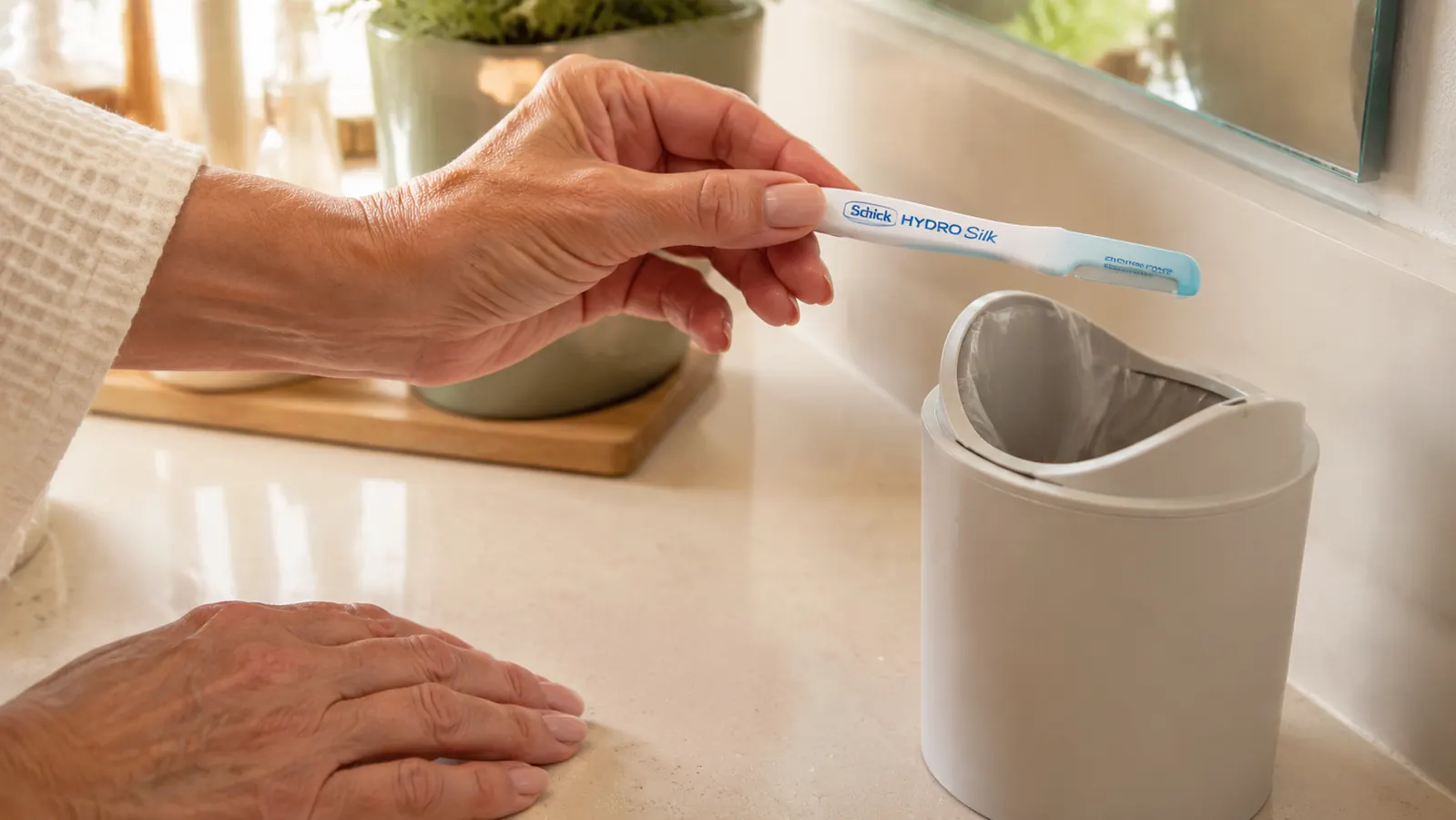
This one is not dramatic, but it matters. Each tool in the pack is only good for a handful of sessions before it dulls, and I wipe the blade with rubbing alcohol before every single session, not just occasionally. A dull or dirty blade is more likely to drag and irritate skin than a sharp, clean one, which sounds backward until you think about it.
I also store mine in a small zippered pouch rather than loose in a drawer, partly for cleanliness and partly because I have grandkids who visit and rummage through bathroom drawers with zero warning. A guarded blade is safer than an open one, but I still treat it like something that needs a proper home.
Questions Readers Keep Asking Me
Is it safe to use with an exfoliating acid or retinol routine? Not on the same day. I learned this from the nurse's story above and now leave at least a full day between dermaplaning and any retinol or acid application. Doubling up on exfoliation in one sitting is the single fastest way to turn a mild routine into an irritated one.
Is sixty-something too old to start? No, and this is the question I get most from women my own age. Mature skin does tend to be thinner and can show redness a bit more easily, which just means a lighter hand and a slower first attempt, not avoiding it altogether. My own skin has handled eight weeks of weekly use without a single lingering issue.
Does it actually hurt? No. At most it feels like a light scraping sensation, similar to shaving your legs with a dull razor, minus any real pressure if you are doing it correctly. If it stings or burns, that is your sign to ease up immediately, not push through.
What about moles or skin tags? Work around them entirely, do not go near them. I avoid a full quarter inch on either side of any mole on my own face, and the nurse specifically recommended the same buffer to anyone who asked her directly.
Can you use it if you're pregnant or breastfeeding? Dermaplaning itself is mechanical, not chemical, so there is no medication or active ingredient involved, which is different from a lot of skincare questions people ask during pregnancy. Even so, the nurse's standard advice is to run anything new past your OB first, simply because skin can behave differently during that stretch of life and it costs nothing to ask.
What I Liked
- Precision cover genuinely prevents the deep cuts people fear
- No credible link to thicker or faster hair regrowth, confirmed by a dermatology office
- Sun sensitivity risk is easily managed with sunscreen the next day
- Easy to wipe down and store safely away from curious hands in the house
- Costs very little for the safety margin you're actually getting
Where It Falls Short
- Pressing too hard over bony areas can still cause light, short-lived irritation
- Requires skipping active breakouts rather than working around them
- Not recommended without a doctor's input if you're on blood thinners
- You do need to be deliberate about sun protection the day after
The scary video got the fear right and the facts wrong. The blade wasn't the dangerous part. Not knowing the actual rules was.

Who This Is For
This is a genuinely safe option for most healthy adult women who want peach fuzz gone and are willing to follow three simple rules with the Schick Hydro Silk Touch-Up Tool: light pressure over bone, sunscreen the next day, and skip active breakouts. If that sounds manageable, and it took me exactly one phone call to confirm it was, this is a low-risk habit worth the drugstore cost.
It is also a good fit if, like Diana, you have heard scary secondhand claims and want an honest answer rather than reassurance for its own sake. I would rather tell a friend the real risks and let her decide than promise her nothing could ever go wrong, because that is not true of any blade near your face, guarded or not.
Who Should Skip It
Skip this if you are on blood thinners without a doctor's go-ahead, if you have active acne, rosacea flares, or any condition a dermatologist is currently treating, or if unsteady hands or reduced vision make working this close to your own face genuinely risky. None of those make you fragile. They just mean this particular tool is not the right fit for you right now, and that is a perfectly fine answer.
Diana, for what it's worth, tried it herself about three weeks after that phone call. She read the same rules I just laid out for you, kept her pressure light over her jawline, wore sunscreen the next morning without me having to remind her, and has not looked back since. That, more than anything I could write here, is the real verdict.
Got the same worried phone call Diana gave me? Here's what to actually check before you decide.
This is the exact three-pack I tested for two months and cleared with my dermatologist's office. See today's price and current availability for yourself.
Amazon Check Today's Price on Amazon →