
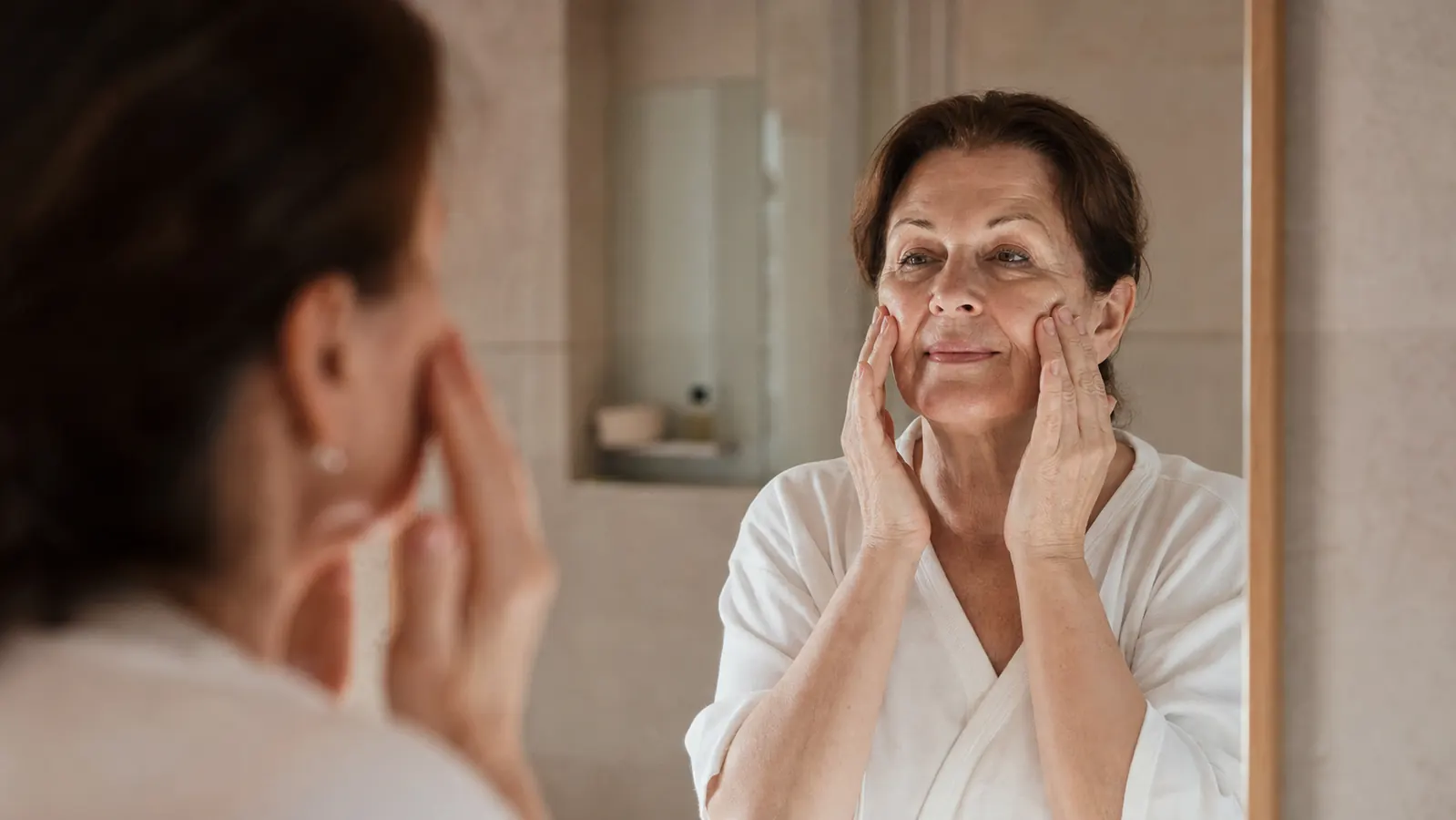
If you've stood in the skincare aisle, or scrolled Amazon at eleven at night, trying to decide between squalane oil and rosehip oil, I want to save you the trial and error I went through. I'm Ruth, I'm 64, and my skin has been dry and a little dull since menopause hit about ten years ago. I've used both oils on my own face for months at a time, not just for one sample-size week, so this isn't a guess from a press release. The short answer: if your main goal is glow and moisture on skin over 45, squalane oil wins for everyday use. Rosehip has its place too, but it's not the bottle I reach for every single morning.
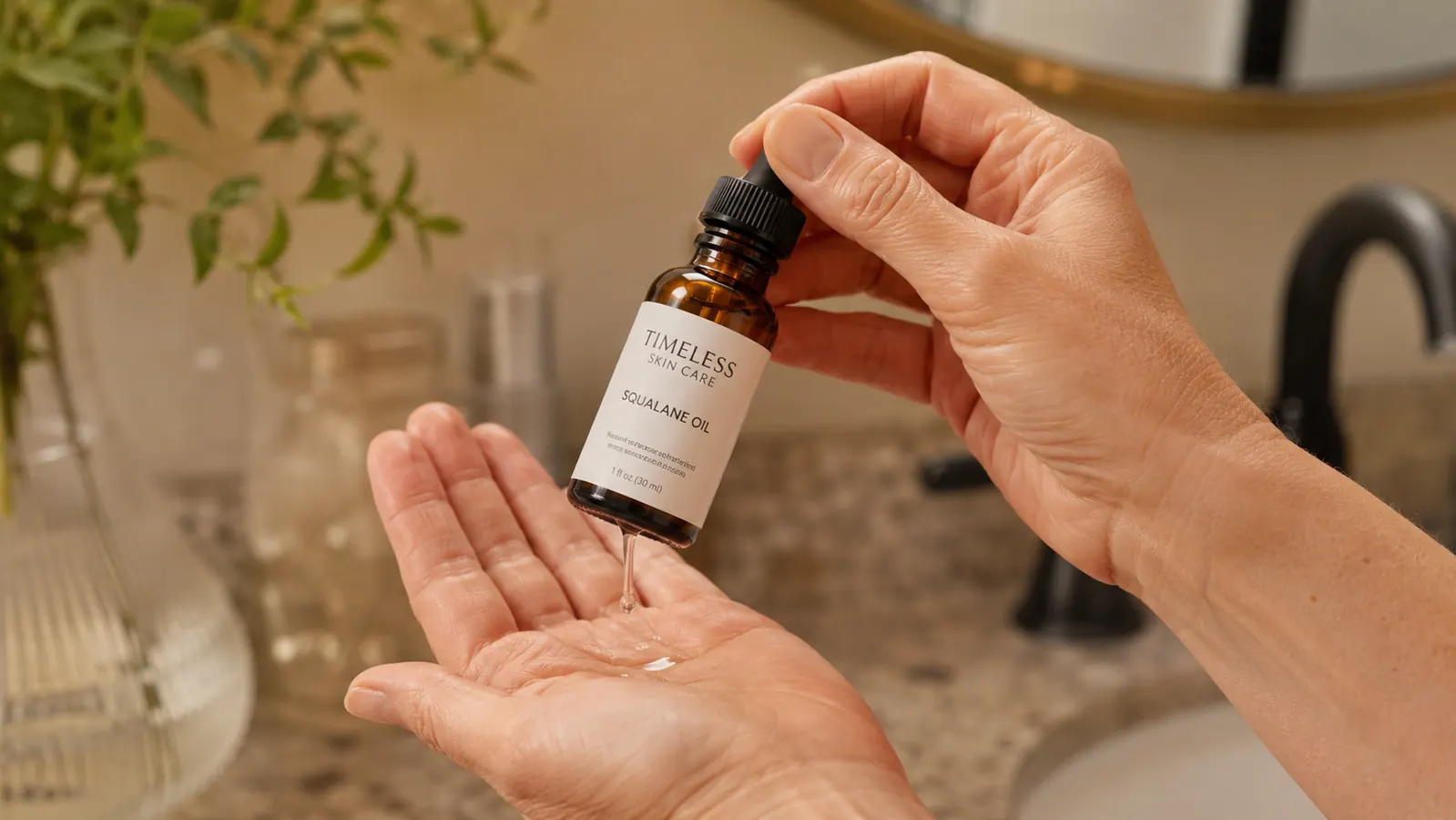
I've been using the Timeless Skin Care Squalane Oil most mornings since March, right after I wash my face and before my moisturizer, and it's become the one product my husband Frank actually comments on, he says my skin looks less tired by lunchtime. My sister Carol, who has oilier, more breakout-prone skin than I do, has been using a rosehip oil at night for about the same stretch. We compare notes most Sunday mornings over coffee at my kitchen table, and this article is basically that conversation written down, the good, the annoying, and the honest tradeoffs of both oils.
Squalane Oil vs Rosehip Oil at a Glance
| Spec | Timeless Squalane Oil | Rosehip Oil |
|---|---|---|
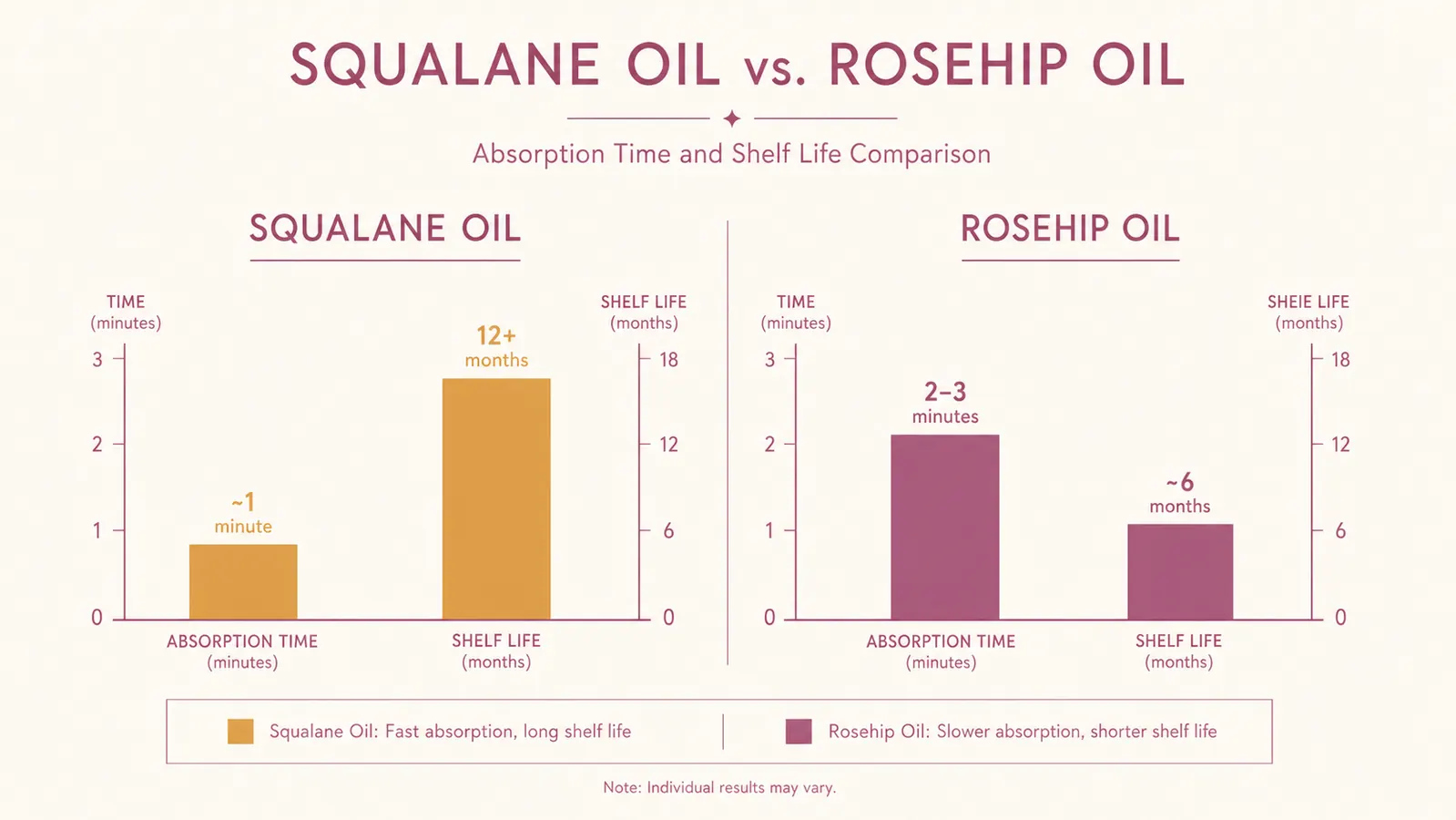
| Texture & absorption | Lightweight, silky glide, sinks in within about a minute | Slightly heavier and a bit tacky, can take two or three minutes to fully absorb |
| Scent | Completely fragrance-free, no plant smell at all | Faint earthy, nutty scent that lingers for a few minutes |
| Shelf stability | Chemically stable, resists oxidation, keeps working well past a year unopened | More prone to going rancid once opened, best used within about six months |
| Comedogenic risk | Very low, mimics skin's own natural oils, rarely triggers breakouts | Low to moderate, some people with breakout-prone skin do react to it |
| Best skin type match | Dry, dehydrated, dull, or mature skin that needs a moisture seal | Normal to oily skin, or skin dealing with early sun spots and uneven tone |
| Active compounds | Pure saturated oil, no vitamin A or C, purely a moisture barrier | Contains natural retinoid-like compounds and vitamin C, more active on the skin |
| Layers under makeup | Yes, foundation glides on smoothly without pilling | Can pill slightly under makeup if applied too heavily |
How I Ended Up Testing Both Side by Side
This whole comparison started because Carol kept telling me rosehip oil had fixed her skin, and I kept telling her the squalane oil I'd been using had fixed mine, and neither of us would budge. So we did what any two stubborn sisters would do, we swapped bottles for a month. I used her rosehip oil at night, she used my squalane oil in the morning, and we texted each other every few days with updates, usually complaints at first, honestly.
My first week with rosehip oil, I noticed a scent I wasn't used to, kind of nutty and green, and my skin felt a little tighter by morning than it does with squalane. Carol, on the other hand, said the squalane oil felt almost too light for her, like it disappeared before she felt like it had done anything. That was our first real clue that skin type matters as much as the oil itself.
By week three, the pattern was clearer. My dry, dull skin wanted something that sealed in moisture without adding any extra activity to deal with, and squalane did exactly that. Carol's oilier, more textured skin actually liked having an active ingredient working in the background overnight. Neither of us switched permanently to the other's oil, but we both walked away with a much clearer picture of which one fits which skin, and that's really what this whole comparison boils down to.
Where Squalane Oil Wins
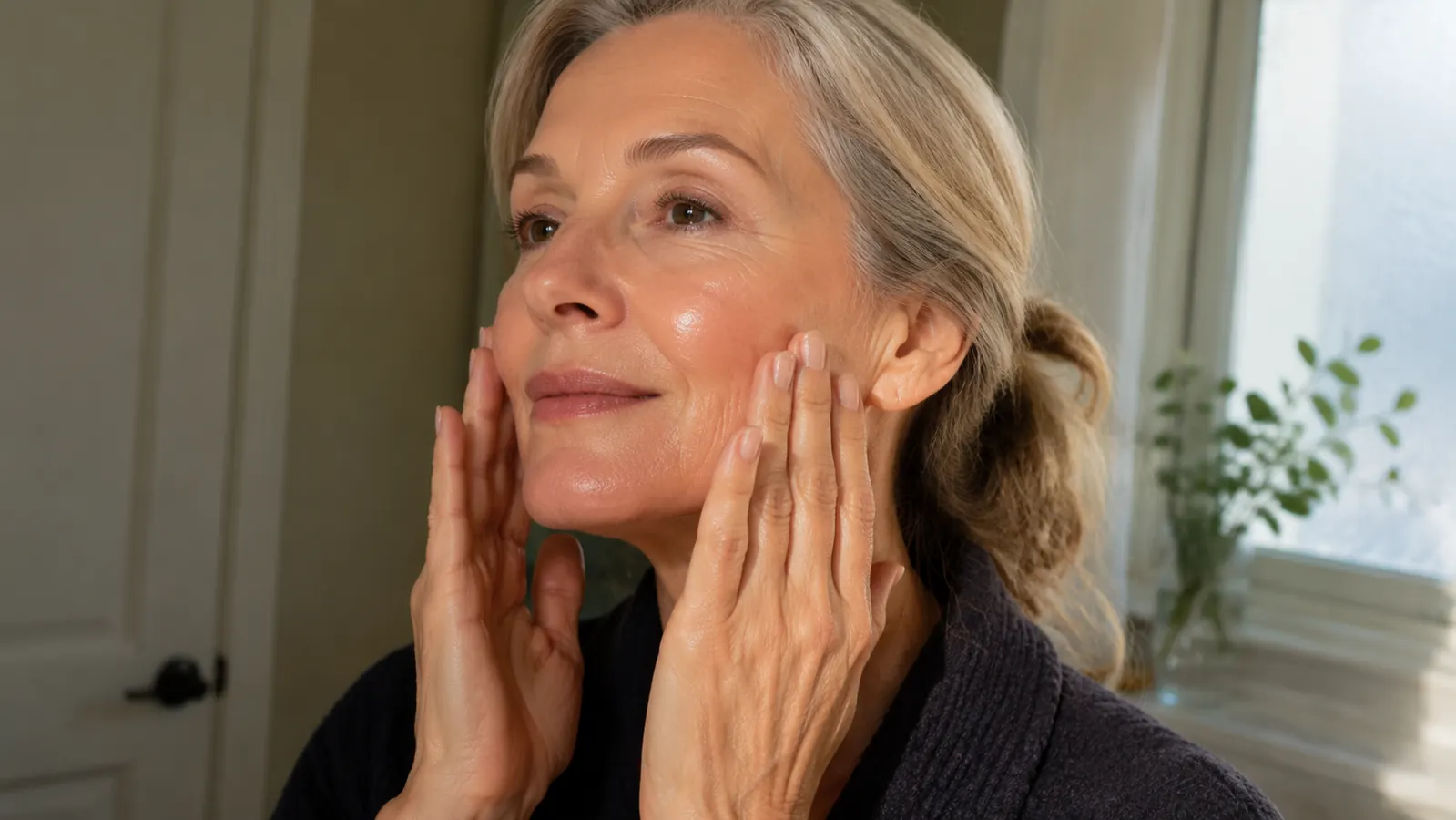
The biggest difference I feel every single morning is how fast squalane oil disappears into my skin. I put three or four drops in my palms, press them into my cheeks, forehead, and neck, and within about a minute my skin has soaked it up completely. There's no greasy film, no shine sitting on top, just skin that looks a little more awake than it did five minutes earlier. For someone my age who doesn't want a ten-step routine, that speed matters more than I expected.
It's also completely fragrance-free, which sounds small until you're someone like me who's had skin get reactive to scented products over the years. I layer it right over my vitamin C serum some mornings and under my retinol cream some nights, and it has never once caused stinging or a breakout. Because it's a pure, stable oil with no active plant compounds fighting for attention, it plays well with almost anything else already in my routine.
The bottle itself has held up too. I'm still on my first one from March, and the oil inside smells exactly the same as the day I opened it, no rancid or 'off' smell that some natural oils develop after a few months. For dry, dull, mature skin that just needs a dependable moisture seal every day, this is the oil that's earned a permanent spot next to my bathroom sink.
Where Rosehip Oil Wins
I'll give rosehip oil its due, it's doing more than just sitting on top of skin. It naturally contains compounds similar to vitamin A, along with vitamin C, so it's working more like a gentle overnight treatment than a plain moisturizer. If your main concern is uneven tone, faint sun spots, or skin that's lost some texture from years of sun exposure, rosehip oil has ingredients actually aimed at those issues, not just moisture.
Carol's experience backs this up. Her skin runs oilier and more prone to clogged pores than mine, and after a month of nightly rosehip oil, she said her skin tone looked more even and a couple of stubborn dark spots from an old breakout had faded noticeably. That's not something plain squalane oil is built to do, since it doesn't carry those active plant compounds at all.
The tradeoff is real, though. Rosehip oil oxidizes faster once the bottle is opened, so you're racing the clock a bit more than you are with squalane. It also has a noticeable earthy scent that some people love and others, like me, find slightly distracting on a face product. If your skin is already very dry or reactive, that added activity can occasionally feel like too much, which is exactly why I didn't love it as my everyday oil. I've also learned to patch test rosehip oil on my inner forearm for a couple of nights before putting it anywhere near my face, something I never had to bother with for squalane.
Where the Ingredients Actually Come From
Something I didn't know before I started reading labels at my kitchen table is that squalane and squalene are not the same thing, and the spelling difference actually matters. Squalene, the naturally occurring compound in our own skin, used to be sourced from shark liver oil years ago, which is exactly the kind of thing that would've made my granddaughter Emily raise an eyebrow at me. The squalane in the Timeless Skin Care bottle is plant-derived, made from sugarcane, and processed to be shelf-stable, which is why it doesn't spoil the way the older shark-based versions did.
Rosehip oil, by contrast, is cold-pressed straight from the seeds of rosehip fruit, mostly grown in Chile and parts of Europe. Cold-pressing keeps more of the natural fatty acids and those vitamin A-like compounds intact, which is exactly why it behaves more like an active treatment than a simple moisturizer. It's a genuinely natural, minimally processed oil, but that same lack of processing is part of why it doesn't hold up as long once the bottle is opened and exposed to air.
For skin like mine, over 45 and already a little more reactive than it used to be, I've come to appreciate a single-ingredient, stable formula more than I expected to. There's nothing hiding in the squalane oil bottle to react to, no essential oils, no added fragrance, just one plant-derived ingredient doing one job well. That simplicity is part of why it's been so easy to keep in rotation without a single flare-up in five months. When I recommend it to other women at church who are just starting to deal with dry, tired-looking skin, that's usually the first thing I tell them, start with the simple oil before you add anything more complicated.
Skip the guesswork. This is the oil I actually keep buying.
After months of comparing both, the Timeless Skin Care Squalane Oil is the one that made it into my permanent routine, fast absorption, no scent, no breakouts, and it plays nicely with everything else on my shelf.
Amazon Check Today's Price on Amazon →What Layering Both Taught Me About My Skin
Once Carol and I finished our month-long swap, we actually landed somewhere in between, at least for her. She still uses her rosehip oil most nights for the active benefits, but she added a squalane oil on top a few times a week to stop her skin from feeling stripped the next morning. That combination has worked better for her than either oil alone, since squalane can act as a simple moisture seal over almost any other product without interfering with it.
For me, I tried the same layering trick a few nights and honestly didn't need it. My skin doesn't need the extra activity rosehip brings, it just needs consistent hydration, so squalane oil alone, morning and night, has been enough on its own. That's really the lesson here, these two oils aren't true rivals so much as tools built for different jobs, and knowing which job your skin actually needs is most of the battle.
How Long One Bottle Actually Lasts
Practical question my niece asked me over the holidays: how long does a little 1 ounce bottle even last? Using three to four drops every morning, and sometimes again at night, my bottle of squalane oil has stretched close to two and a half months, and I'm not stingy with it. A few drops go a long way because the texture is so light, you never feel like you need to pile it on to get coverage across your whole face and neck.
Rosehip oil, in my experience and Carol's, gets used up around the same pace, but because it's more prone to oxidizing, you're somewhat pressured to use it up faster rather than let it sit half-full for months. When I check today's price on both oils side by side, they land in a similar range for the bottle size, so the real deciding factor isn't value, it's simply which oil your skin actually needs to look and feel its best.
Who Should Buy Which
If your skin runs dry, dull, or sensitive, and you mainly want a dependable daily glow booster that won't fight with your other products, squalane oil is the simpler, safer choice, and it's the one I'd tell any friend my age to start with. It's forgiving, it's fragrance-free, and it does its one job, sealing in moisture, extremely well every single time.
If your skin leans oilier, or you're mainly chasing improvement in tone and texture rather than pure hydration, rosehip oil is worth considering, especially at night when your skin has time to work with its active compounds without sun exposure undoing the effort. Just know you're signing up for a shorter shelf life and a stronger scent in exchange for those extra benefits. For most women I know in my age group dealing with dryness and dullness, though, squalane oil is still the one that earns a spot on the counter for the long haul.
Ready to see what a fast-absorbing, fragrance-free oil does for your morning glow?
This is the bottle that's stayed in my routine since March, no scent, no greasy film, just skin that looks a little more awake by the time I leave the house.
Amazon Check Today's Price on Amazon →