

If you have ever caught your reflection in a bright bathroom mirror and noticed little white flakes sitting on top of your foundation, you know exactly the moment I mean. It usually shows up first around the nose, the chin, or those two stubborn patches on the cheeks, right where a moisturizer alone never seems to reach. I spent a solid two years cycling through thicker creams, telling myself the answer was just more product, when the real problem was that none of what I was using could actually get through to where the dryness was starting.
What finally turned things around for me was not another cream at all. It was switching to a lightweight squalane facial oil and using it in the right order, in the right amount, at the right point in my routine. I keep hearing from friends my age who tried an oil once, felt it sit greasy on top of their skin, and swore off oils completely. That was almost me too, until I learned that most of what went wrong for me was timing and technique, not the idea itself. Below is exactly how I do it now, step by step, so you can skip the two years of trial and error I went through.
The Oil I Reach for Every Single Morning
Before we get into the steps, here is the bottle that sits on my counter year round. Timeless Skin Care Squalane Oil is fragrance-free, plant-derived, and light enough to wear under makeup without pilling. It is the product every step below is built around.
Amazon Check Today's Price on Amazon →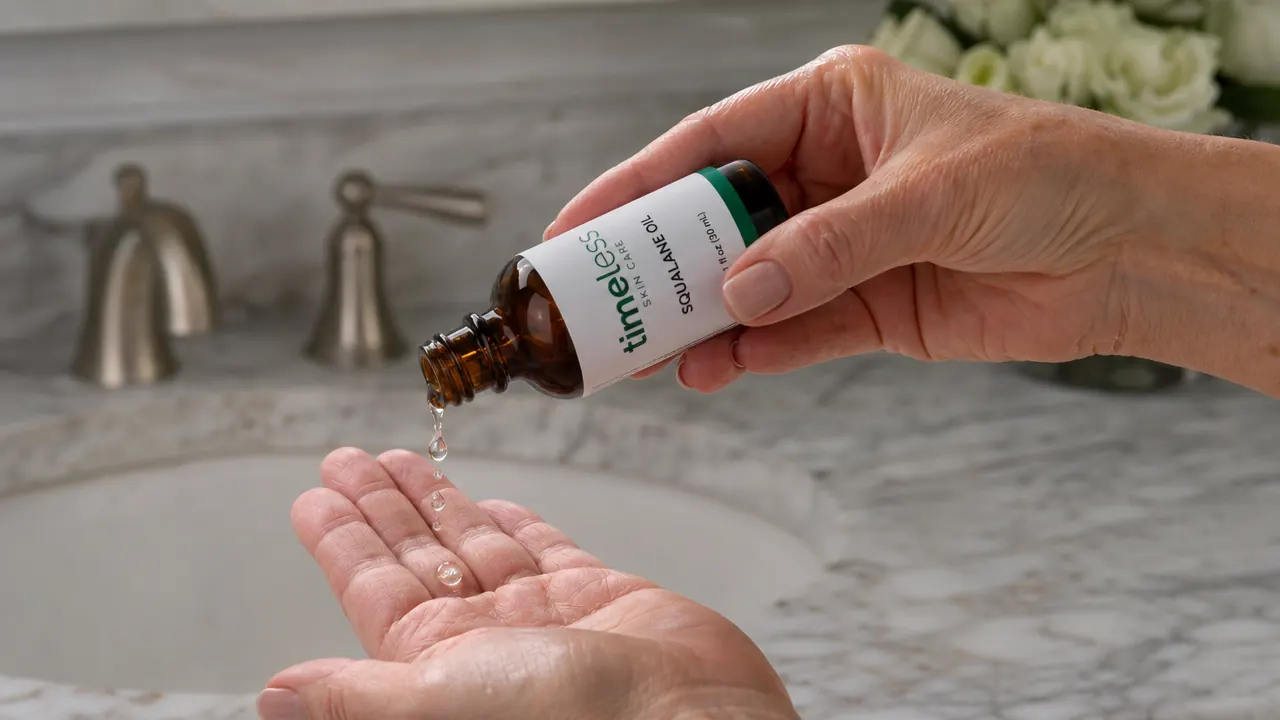
Step 1: Figure Out Why Your Skin Is Actually Flaking
Before you fix anything, it helps to know what you are fixing. Flaking is almost never about your skin making too little oil on its own. It is usually about your skin's barrier, the thin outer layer that holds moisture in, getting worn down faster than it can repair itself. For most women over 45, that comes from a combination of things happening at once: drier indoor air from heat or air conditioning, hot showers that strip natural oils, a cleanser that is a little too harsh, or an anti-aging product like retinol working faster than your skin can keep up with.
I made the mistake for years of treating flaky patches like a hydration problem and reaching for water-based products. Water-based serums can actually make flaking worse on their own if there is nothing sealing that moisture in afterward. The flakes you see are often dead skin cells that are not shedding properly because the surface underneath is too dry and too irritated to let them go. That is the piece a facial oil solves that a toner or a mist cannot.
Take a minute and think honestly about your last few weeks. Did you start a new retinol or exfoliating acid? Has the weather turned colder or drier? Are you washing your face with hot water because it feels good after a long day? None of these are things to feel bad about, they are just useful clues, because the fix is the same either way: rebuild the barrier before you add anything else back into the mix. And it is worth saying plainly, this is not a sign you are doing something wrong at your age. Our skin simply produces less of its own natural oil as the years go by, and the routine that worked fine at thirty needs a small adjustment now, that is all.
Step 2: Choose a Barrier-Repairing Oil, Not Just Any Oil
Not every facial oil is built for this job. A lot of the oils lining the shelf at the drugstore are heavier, plant-based blends that sit on top of the skin and can actually clog pores on some of us, especially around the jaw and hairline. What you want for flaky, barrier-stressed skin is something that mimics what your own skin already produces, so it absorbs instead of sitting there.
This is where squalane comes in. It is a stable, shelf-friendly version of squalene, a compound your skin naturally makes to keep itself soft and protected, and production of it slows down noticeably as we get past our mid-forties. A plant-derived squalane oil, like the one from Timeless Skin Care, is odorless, colorless, and thin enough to sink in within a minute or two rather than leaving a greasy film. That matters if you are putting on makeup afterward, or if you just do not want to feel like you have a layer of salad oil on your face all morning.
I have tried the heavier options too, coconut oil, olive oil, even a rosehip blend that smelled wonderful but broke me out along the chin within a week. None of them absorbed the way squalane does, and none of them felt right under makeup. That is not to say those oils are bad for everyone, skin is personal, but if you are specifically dealing with flaking and you want something that will not fight your foundation later in the day, squalane is the one I would start with.
I keep it simple and skip the ones with added fragrance or a long ingredient list. Flaky, irritated skin does not need more ingredients working against each other, it needs one thing that does its job quietly and consistently, every day, without you having to think about it. A single-ingredient bottle like the one from Timeless Skin Care also means you know exactly what is helping, which makes it much easier to tell if something else you add later is actually working or just along for the ride.
Step 3: Apply It in the Right Order, on Damp Skin
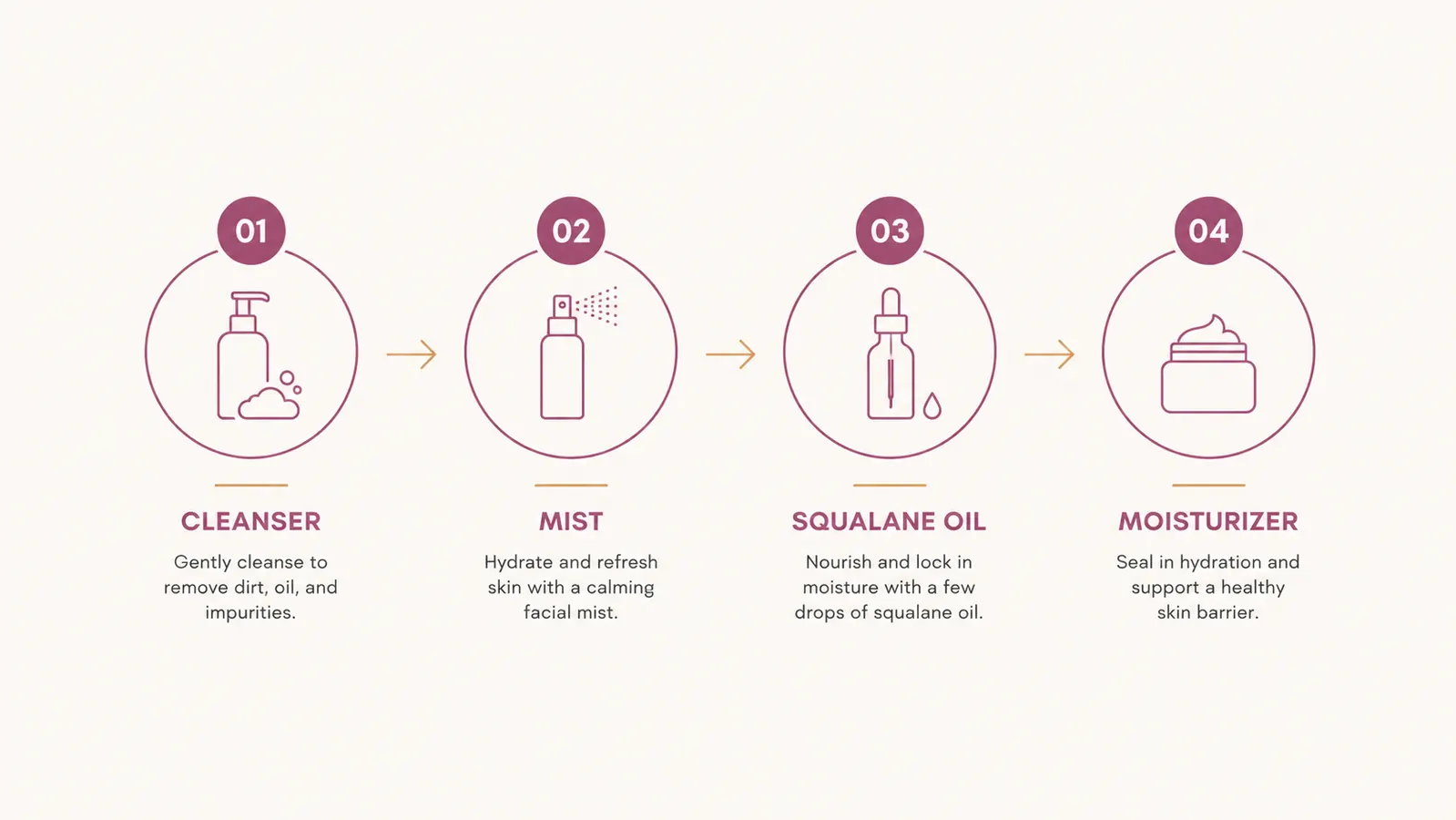
This is the step most people skip, and it is the one that made the biggest difference for me. Oil should almost always go on after water-based products, not before, and ideally while your skin is still slightly damp rather than bone dry. Here is the order that works: cleanse with a gentle, non-foaming cleanser, pat your face mostly dry but leave a little dampness, apply any lightweight serum or hydrating mist you use, then press the squalane oil on top while everything is still a bit moist.
The reason this order matters is that oil forms a seal. If you apply it to completely dry skin with nothing underneath, you are sealing in dryness. If you apply it over a damp, slightly hydrated surface, you are locking that moisture in and slowing down how fast it evaporates over the course of the day or overnight. Same bottle, same amount, completely different result depending on when you use it.
Morning and night both work, but I use it a little differently at each end of the day. In the morning I apply it thin, right before sunscreen, so it has time to absorb before I put on makeup. At night I am not worried about layering under anything else, so I let myself use a touch more and go straight to bed. If your skin is flaking badly right now, doing both morning and night for the first week or two makes a real difference in how fast things calm down.
Step 4: Use the Right Amount
More is not better here, and this trips people up because we are used to thinking a bigger dose of a treatment product means faster results. With squalane oil, two to three drops is plenty for the entire face, and I mean the whole face, not just the flaky patches. Warm it between your fingertips first, then press it into the skin rather than rubbing it in hard. Pressing helps it absorb evenly instead of dragging at delicate skin that is already stressed.
If you have specific patches that are worse, like around the nose or along the jaw, you can go back after the first layer has absorbed and press one extra drop directly onto that spot. But starting with too much all over just leaves a greasy finish that will make you want to stop using it, which defeats the whole purpose.
One trick I picked up that stretches the bottle and helps with stubborn dry patches on the neck and chest too, mix a drop of the oil directly into your regular moisturizer in your palm before applying. It softens the texture of a thicker cream and lets you cover more ground without buying a second product just for your neck. A single one-ounce bottle used this way has lasted me close to three months.

Step 5: Stick With It and Watch for These Changes
This is the step nobody wants to hear, but it is the honest one. Barrier repair is not an overnight fix, even though the oil itself feels good the first time you use it. Most women I have talked to, myself included, start noticing less visible flaking within the first five to seven days, but the deeper improvement, where your skin actually looks like it has that healthy glow back instead of just less flaking, takes closer to three or four weeks of consistent use, morning and night.
Track it loosely if you want proof it is working. Take a plain photo in the same light once a week, no filter, no makeup. Look specifically at the areas around your nose and chin where flaking tends to show up first. Most people are surprised at how much smoother things look by week three compared to week one, even though the day-to-day change feels too small to notice in the mirror.
If you are not seeing any change at all after three full weeks of consistent use, it is worth looking at what else might be working against you. Check whether your cleanser foams a lot, foaming cleansers are notoriously drying. Check whether you are still using a strong exfoliating acid every night. And if the flaking is accompanied by redness, itching, or burning rather than just dryness, that is a good reason to see a dermatologist rather than keep troubleshooting on your own, since that can point to something like eczema or a reaction that needs a different approach.
I did not need a ten-step routine. I needed one product used in the right order, and enough patience to let three weeks pass before I judged it.
What Else Helps
The oil does most of the work, but a few small habits around it make a real difference. Skip hot showers on your face specifically, even a lukewarm rinse helps preserve the barrier you are trying to rebuild. Run a humidifier in the bedroom if your air is dry, particularly in the colder months, since a lot of the flaking I see in myself and my friends gets noticeably worse the moment the heat kicks on in the house. Go easy on exfoliating acids and retinol while your skin is actively flaking, you can bring them back in slowly once things have calmed down, usually starting at half the frequency you were using before.
It also helps to look at what you are eating and drinking, not because water moisturizes skin directly, but because everything else you are doing works better when your body is not working against you. And do not underestimate sunscreen. Sun exposure breaks down the same barrier you are trying to repair, so a broad-spectrum sunscreen every morning, applied after the oil has absorbed, protects the progress you are making rather than letting it get undone by the afternoon.
Ready to Start Tomorrow Morning?
You do not need a full routine overhaul, just one bottle used the right way. This is the Timeless Skin Care Squalane Oil I have used every day for years, and the one every step above was written around.
Amazon Check Today's Price on Amazon →